Showing posts with label US Financial Crisis. Show all posts

Sunday, March 1, 2009

Take From The Rich, Give To Everyone Else

Take From The Rich, Give To Everyone Else

Read Full Story Here

Read Full Story Here

Read Full Story Here


Rebalancing the Tax Code so that the Wealthiest Pay More
Questions about the morality and feasibility of redistributing the American tax burden in novel ways have many up in arms on both sides.

Read Full Story Here

Saturday, October 4, 2008

Same Old Pork While Nation Languishes

Same Old Pork While Nation Languishes
for 24-Hours of Propaganda


"Now, we've got money for everyone in here, right? We didn't leave anyone out, right?"

Congressional deal-brookers slopped a mess of pork into the $700 billion financial rescue bill passed by the House today - including a tax break for makers of kids' wooden arrows - in a bid to lure reluctant lawmakers into voting for the package

Stuffed into the 451- page bill are more than $1.7 billion worth of targeted tax breaks to be doled out for a sty full of eyebrow-raising purposes over the next decade.

The $700 billion package was sailing into a stiff political wind. Constituent opposition to any sort of rescue has been strong and vocal - and lawmakers have been running scared while shocking extremes in stock trading has wiped out many American's investment portfolios.

"This is how Washington works," said Keith Ashdown of Taxpayers for Common Sense, a Washington research group. "A big pot of pork is their recipe for final passage."

The special provisions include tax breaks for Manufacturers of kids' wooden arrows ($6 million), Puerto Rican and Virgin Islands rum producers($192 million), Wool research, Auto-racing tracks ($128 million), Corporations operating in American Samoa ($33 million), and perhaps most surprisingly Small- to medium-budget film and television productions ($10 million)

Another measure inserted into the bill appears to be a bald-faced bid aimed at winning the support of Rep. Don Young (R-Alaska), who voted against the original version when it went down in flames in the House on Monday.

That provision - a $223 million package of tax benefits for fishermen and others whose livelihoods suffered as a result of the 1989 Exxon Valdez oil spill - has been the subject of fervent lobbying by Alaska's congressional delegation.


"The most important thing is that we need to bail out our friends on Wall Street and in banking and the insurance business. Normal, every day American's will feel the effect of the rich getting richer again soon enough."

Some of the pork-barrel measures buried in the financial rescue package had been contained in a bill that previously passed the Senate, but died in the House.

The Congressional Budget Office said the package of breaks - including obvious pork and some more defensible tax-relief measures - will add about $112 billion to budget deficits over the next five years because the bill doesn't contain enough offsetting revenue hikes to keep the budget balanced.

The legislative lard annoyed Tom Schatz, president of the watchdog group Citizens Against Government Waste.

"There's always something that goes on at the end where the last dozen members are trying to get something for themselves or for a special interest rather than what might be good for the country," Schatz said.

Some of the other measures added to win approval include a $3.8 billion health-care provision that forces insurance companies to provide coverage for mental-health treatment equivalent to the coverage they provide for physical illness.

Other add-ons will increase individual tax credits and help shield some Americans from the painful alternative minimum tax, and offer breaks for businesses that invest in alternative fuels.

Also, several federal income-tax breaks due to expire will now be extended through 2009.

"We all know that we are in the midst of a financial crisis," House Republican Leader John Boehner of Ohio, said shortly before casting his vote for government intervention in private capital markets that was unthinkable only a month ago.

"And we know that if we do nothing, this crisis is likely to worsen and to put us into an economic slump like most of us have never seen."

Speaker Nancy Pelosi, D-Calif., said the bill was needed to "Begin to shape the financial stability of our country and the economic security of our people."

Stocks were up on Wall Street, where there was a lot of anticipation of the vote but where investors also were buffeted by a bad report on the job market. The Labor Department said employers slashed 159,000 jobs in September, the largest cut in five years and further evidence of a sinking economy.

Even before the measure cleared Congress, the White House sought to dampen optimism of its immediate impact on the economy. "This legislation is to fix a problem in our financial markets," said spokesman Tony Fratto. "It's not sold as giving a boost to the economy, but rather preventing a crisis in our economy... If it works as we hope it will, credit will be able to begin flowing again."

The House vote marked a sharp change from Monday, when an earlier measure was sent down to defeat, largely at the hands of angry conservative Republicans.

"It will take time for this bill to have an impact," President George W. Bush said in a speech outside the Oval Office, "it will be done as expeditiously as possible, but it won't be overnight."


"If we don't give $192 million to the Puerto Rican Rum Manufacturers they will surely succomb to the market. We can't let that happen! Capitolism has become the race to save your friends and cronies, not the survival of the fittest all you dumb citizens thought."

Thursday, October 2, 2008

Fatter Bailout Bill Will Increase National Debt to $11.3 Trillion

Fatter Bailout Bill Will Increase National Debt to $11.3 Trillion
for 24-Hours of Propaganda


"I'm so excited! My $700 Billion Spending Spree is about to begin!"

After one devastating and spectacular failure, the $700 billion financial industry bailout found a second life Wednesday, speeding toward passage in the Senate and gaining ground in the House where conservative opposition seemed to soften.

Senators loaded the economic rescue bill with tax breaks and other sweeteners for the right and left, hoping to secure approval in the House by Friday, just days after lawmakers there stunningly rejected an earlier version and sent markets plunging around the globe.

Both presidential candidates, Republican John McCain and Democrat Barack Obama, were making rare appearances to vote their support. That would send the package back to the House, where passage would require a turnaround of 12 votes from Monday's 228-205 defeat.


"See, what we are going to do is take $2400 from each and every human being in the United States, and use that money to give free houses to all the subprime deadbeats who never should have had a house in the first place."

Leaders in both parties, as well as private economic chiefs everywhere, said Congress must quickly approve some version of the measure to start loans flowing and stave off a potential national economic catastrophe.

"Inaction is not an option," Senate Majority Leader Harry Reid of Nevada said a few hours before the Senate was to vote. "This is not a bailout for Wall Street. It's a bailout for our country."

President Bush said, "It's very important for members to take this bill very seriously."

Congressional leaders targeted the 133 House Republicans who voted against the bill Monday.


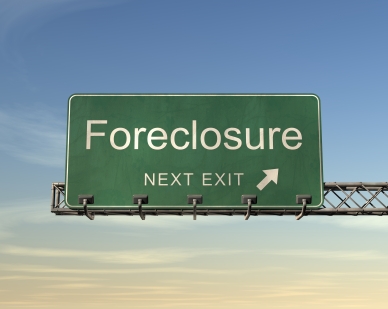
"Just because people can't read a contract, or understand the terms 'variable' and 'adjustable', or go to work and pay their bills, doesn't mean we should take away their homes. Foreclosures need to stop! Free houses for everyone!"

Senator Chris Dodd, Chairman of the Senate Banking, Housing, and Urban Affairs Committee, said after the Senate passed the Bailout Bill, " The Emergency Economic Stabilization Act will not only provide stability and confidence to our financial markets, but also will help American families who are struggling to make ends meet. The legislation gives the Treasury Secretary the authority to respond quickly and forcibly to the current crisis, while creating strong protections for American taxpayers, helping to preserve the American dream of homeownership, and cracking down on excessive compensation for corporate executives who made bad decisions."

“Many Americans are confused and angry about this crisis – and rightfully so. They are concerned about whether this solution is best for their families and the nation. I want to assure the American people that this legislation was created for the families who are worried about their home values, their retirement savings, and how they are going to afford groceries, medicine, and gas. These bipartisan efforts weren’t about the storm that hit Wall Street – they were about the gathering storm on Main Street. Tonight, the Senate acted decisively and responsibly – not for the benefit of a chosen few, but for all Americans.”

Dodd also announced the enactment of the HOPE for Homeowners program, a voluntary initiative to help distressed borrowers refinance their mortgages. “Each day, more and more American families and communities are forced to cope with the devastating effects of foreclosure. Starting today, many Americans who are struggling to keep their homes will have a new tool at their disposal – HOPE for Homeowners. This program will enable hundreds of thousands of American families who are trapped in bad loans – often the result of predatory lending practices – to convert their mortgages into new, affordable loans. With mortgages they can afford, homeowners will be better equipped to keep their homes and stave off foreclosure."

“HOPE for Homeowners is a major step forward in our efforts to address the root cause of our economic crisis – the foreclosure crisis. I will continue to monitor very closely the effectiveness of this program in preserving homeownership. When Congress passed the Housing and Economic Recovery Act, we sent a message to Americans that help was on the way. For hundreds of thousands of American families, today’s enactment of HOPE for Homeowners means that help has finally arrived.”

Constituent feedback changing dramatically since Monday's House defeat and the corresponding market plunge, allowing lawmakers' comfort level with the package to increase markedly.


"We Want Our Free Houses!"

Most American's are still unclear exactly what the Bailout will consist of, and who it will help.

Despite the common misperception, those who have seen their retirement accounts, stock portfolios, and other related investments plunge and/or lose their entire value will not be compensated in any sort of direct fashion. There is no forthcoming second round of "Economic Stimulus" checks coming.

What will happen is perhaps thousands, maybe hundreds of thousands, of subprime borrowers who have defaulted on their homes--which is where the financial crisis originally took root--will get their homes virtually for free, punishing all of the hard-working American's who have borrowed and spent responsibly.

SUMMARY OF THE “EMERGENCY ECONOMIC STABILIZATION ACT OF 2008”

I. Stabilizing the Economy
The Emergency Economic Stabilization Act of 2008 (EESA) provides up to $700 billion to the
Secretary of the Treasury to buy mortgages and other assets that are clogging the balance sheets of financial institutions and making it difficult for working families, small businesses, and other companies to access credit, which is vital to a strong and stable economy. EESA also establishes a program that would allow companies to insure their troubled assets.

II. Homeownership Preservation
EESA requires the Treasury to modify troubled loans – many the result of predatory lending
practices – wherever possible to help American families keep their homes. It also directs other
federal agencies to modify loans that they own or control. Finally, it improves the HOPE for
Homeowners program by expanding eligibility and increasing the tools available to the
Department of Housing and Urban Development to help more families keep their homes.

III. Taxpayer Protection
Taxpayers should not be expected to pay for Wall Street’s mistakes. The legislation requires
companies that sell some of their bad assets to the government to provide warrants so that
taxpayers will benefit from any future growth these companies may experience as a result of
participation in this program. The legislation also requires the President to submit legislation
that would cover any losses to taxpayers resulting from this program from financial institutions.

IV. No Windfalls for Executives
Executives who made bad decisions should not be allowed to dump their bad assets on the
government, and then walk away with millions of dollars in bonuses. In order to participate in
this program, companies will lose certain tax benefits and, in some cases, must limit executive
pay. In addition, the bill limits “golden parachutes” and requires that unearned bonuses be
returned.

V. Strong Oversight
Rather than giving the Treasury all the funds at once, the legislation gives the Treasury $250
billion immediately, then requires the President to certify that additional funds are needed ($100 billion, then $350 billion subject to Congressional disapproval). The Treasury must report on the use of the funds and the progress in addressing the crisis. EESA also establishes an Oversight Board so that the Treasury cannot act in an arbitrary manner. It also establishes a special inspector general to protect against waste, fraud and abuse.

Tuesday, September 30, 2008

Obama to Nation: "Pay Up!"

Obama to Nation: "Pay Up!"
for 24-Hours of Propaganda


"Just give me, Wall Street, and the US Government all of your money and you can trust us not to spend it on ourselves...I promise."


Democratic presidential candidate Barack Obama is calling for Americans to get behind attempts to salvage a $700 billion rescue plan for the financial sector.

Obama told a crowd at the University of Nevada at Reno that if Wall Street fails, ordinary people will be hurt, too. Harkening back to his days as the right-hand man for a slumlord, Obama urged the American public that it would be better to pay up now as opposed to him having to come back and ask again.

The Illinois Democrat warned that if Congress doesn't take action, people will find it tougher to get a mortgage for a home, a loan for college or a loan to buy a car. Fear mongering is obviously the way to trick American's into backing a measure that anyone with good sense would give the "smell test" and reject.

Obama is proposing that the limit on federal deposit insurance for bank accounts be raised from $100,000 to $250,000. Increasing that limit, he says, would help small-business owners and reassure nervous Americans as well as help shore up the economy. How exactly this would have a direct effect on small-business owners, or reassure nervous American's with less than $250,000, was not fully explained.

“It’s the American economy that needs this rescue plan,” Obama told the assembled score of students, explicitly hitching his ongoing argument about social change to the financial crisis, arguing that the nation must transcend its differences and unite behind the bailout.

“This country and the dream it represents are being tested in a way that we haven’t seen in nearly a century. And future generations will judge ours by how we respond to this test,” he said. “Will they say that this was a time when America lost its way and its purpose? When we allowed our own petty differences and broken politics to plunge this country into a dark and painful recession? Or will they say that this was another one of those moments when America overcame? When we battled back from adversity by recognizing that common stake that we have in each other’s success?”

By now, such rhetoric is familiar to the public: Obama’s knack for fusing the language of (progressive) movement organizing with (conservative) American exceptionalism. Today, he took a risk by wrapping it around a deeply unpopular and complex measure that is widely seen as a sop for reckless elites.

“I believe that this is one of those moments. I know that many of you are anxious about your future and the future of this country,” Obama continued. “Despite all of this, I ask you to believe – believe in this country and your ability to change it. I ask you what has been asked of the American people in times of trial and turmoil throughout our history – what was asked at the beginning of the greatest financial crisis this nation has ever endured. In his first fireside chat, Franklin Roosevelt told his fellow Americans that “..there is an element in the readjustment of our financial system more important than currency, more important than gold, and that is the confidence of the people themselves. Confidence and courage are the essentials of success in carrying out our plan. Let us unite in banishing fear. Together, we cannot fail.”

Obama channeled The New Deal era — the fear of depression and the promise of a populist agenda — to recast the bailout as a working-class imperative:

“America, together, we cannot fail. Not now. Not when we have a crisis to solve and an economy to save. Not when there are so many Americans without jobs and without homes. Not when there are families who can’t afford to see a doctor, or send their child to college, or pay their bills at the end of the month. Not when there is a generation that is counting on us to give them the same opportunities and the same chances that we had for ourselves...Now is the time to make them proud of what we did here. Let’s give our children the future they deserve, and let’s act with confidence and courage to show the world that at this moment, in this election, the United States of America is still the last, best hope of Earth.”


Obama and his mentor, the slumlord Antoin Rezko, who taught Obama everything he knows about pumping the poor for more money.

Congress to Wall Street: "Drop Dead!"

Congress to Wall Street: "Drop Dead!"
for 24-Hours of Propaganda


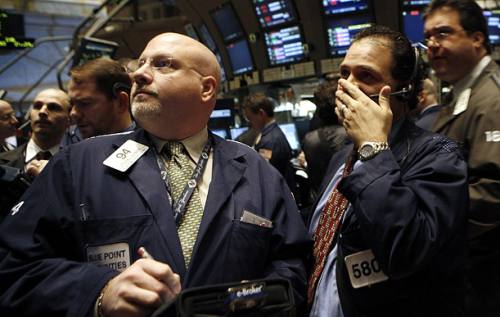
Wall Steet waits in anticipation for the Bail-Out that the US Government promised them.

With many congressional members facing tough re-election bids, especially now during what may prove to be the worst Economic Crisis in History, the much ballyhooed $700 Billion Bailout Package for Wall Street failed to pass, even with bi-partisian support.

“This bill failed because Barack Obama and the Democrats put politics ahead of country,” said a statement from Douglas Holtz-Eakin, McCain’s top economic adviser, who had represented McCain on Capitol Hill over the last several days.


Instead of a Bail-Out For Wall Street, How About Kicking All the Deadbeats out of the houses they never should have had?

McCain suspended his campaign Thursday morning to return to Washington to try and get a deal done. Soon after his arrival, though, an agreement that appeared to be coming together fell apart–a situation that Democrats pinned on McCain. Over the next few days, McCain’s campaign took credit for bringing House Republicans, who were reluctant to support the bailout, to the negotiating table. Late Saturday night, the House GOP leadership signed off on a deal. But the majority of the caucus still opposed it when the vote was called Monday.

“From the minute John McCain suspended his campaign and arrived in Washington to address this crisis, he was attacked by the Democratic leadership: Senators Barack Obama and Harry Reid, Speaker Nancy Pelosi and others. Their partisan attacks were an effort to gain political advantage during a national economic crisis. By doing so, they put at risk the homes, livelihoods and savings of millions of American families,” Holtz-Eakin said in his statement. He also blamed Pelosi for delivering a “strongly worded partisan speech” before the vote was called.


A Road That Should Be More Taken

Others were also blaming Pelosi's pre-vote speech. House Minority Leader John Boehner said that Pelosi’s speech “poisoned” the Republican caucus and “caused a number of members we thought we could get to go south.”

In one fell swoop, the House of Representatives applied a sledgehammer to the American economy. The staggering plunge in the value of publicly quoted stocks in the US - a $1.2 trillion fall - shows clearly just how much Wall Street had been holding out for a financial bail-out. Corporate America lost, in one day, a chunk of its value the size of the Indian economy.

Obama took a more hands-off approach to the legislative process, encouraging it along but not trying to intervene directly.

The current mess would never have occurred in the absence of ill-conceived federal policies. The federal government chartered Fannie Mae in 1938 and Freddie Mac in 1970; these two mortgage lending institutions are at the center of the crisis. The government implicitly promised these institutions that it would make good on their debts, so Fannie and Freddie took on huge amounts of excessive risk.

Worse, beginning in 1977 and even more in the 1990s and the early part of this century, Congress pushed mortgage lenders and Fannie/Freddie to expand subprime lending. The industry was happy to oblige, given the implicit promise of federal backing, and subprime lending soared.

This subprime lending was more than a minor relaxation of existing credit guidelines. This lending was a wholesale abandonment of reasonable lending practices in which borrowers with poor credit characteristics got mortgages they were ill-equipped to handle.

Once housing prices declined and economic conditions worsened, defaults and delinquencies soared, leaving the industry holding large amounts of severely depreciated mortgage assets.

So, in the end, not only was it Wall Street "Fat Cats" who brought us to the prespice of collapse, but it was the Federal Government, and in the end, consumers who took on financial obligations they were ill-equipped to handle.

The blame goes all the way around.

The blame does rest at the feet of the very same American Citizens who are decrying "predatory lending" practices and "Wall Street Greed" as the cause of the Financial Crisis.

Every person who took out a loan and did not repay it is to blame. Every single person who believes the US Government should intervene to stop their own foreclosure, readjust their mortgage, or give them their house for free is to blame.

Those who have been responsible with their money--who did not take out second and third mortgages and/or buy houses that were way out of their means--are the only innocent parties in this economic collapse.


"Fuck America! Get Your Free House!"

Monday, September 29, 2008

America Nears Catastrophic Economic Collapse

America Nears Catastrophic Economic Collapse
for 24-Hours of Propaganda


"This isn't a crisis so much as it is a bonanza for state-sponsored enterprise."

The US stock market could suffer a devastating crash with shares losing a third of their value this week if Hank Paulson’s financial bailout plan fails, US Treasury officials have warned.

The financial system could face a meltdown of 1929 proportions unless US politicians succeed in their efforts for a $700bn rescue scheme, experts added.

The warning came as Republicans and Democrats met in Washington for a rare weekend debating session to attempt to seal agreement on the contentious plan, aimed at preventing a long-lasting recession in the US.


You will be seeing a lot of these now that the US Mint is ready to print off $900 Billion extra dollars.

Officials are privately painting a far bleaker portrait of the fragility of the global economy than that advanced by President George W Bush in his televised address last week.

One Republican said that the message from government officials is that “the economy is dropping into the john.” He added: “We could see falls of 3,000 or 4,000 points on the Dow [the New York market that currently trades at around 11,000]. That could happen in just a couple of days. What’s being put around behind the scenes is that we’re looking at 1930s stuff. We’re looking at catastrophe, huge, amazing catastrophe. Everybody is extraordinarily scared. It’s going to be really, really nasty.”

Peter Spencer, economic adviser to the Ernst & Young Item Club, said: “This is the time you have to bail people out and ask questions later. It is very difficult to see how the US banking system would survive without that.This has the potential to make 1929 look like a walk in the park.”

Senator Harry Reid of Nevada, the majority leader, said: “We hope sometime [Sunday] evening we can announce some kind of agreement in principle. We may not have another day.”

Rebel Republicans - who see Paulson’s proposals as socialism by the back door - were warned they will be responsible for causing an “amazing catastrophe” if they continue to oppose the plans, which would see taxpayers buy up the bad debts of failing banks. Instead they want an insurance scheme for banks, which would spread the cost to private enterprise.


WaMu couldn't hold on long enough for their piece of the $900 Billion Dollar Pie.

In what is by far the largest bank failure in U.S. history, federal regulators seized Washington Mutual and struck a deal to sell the bulk of its operations to J.P. Morgan.

The collapse of the Seattle banking giant, which was triggered by a wave of deposit withdrawals, marks a new low point in the country's financial crisis. But the deal, as constructed by the Federal Deposit Insurance Corp., could hold some glimmers of hope for the beleaguered banking system because it averts any hit to the bank-insurance fund.

Instead, J.P. Morgan agreed to pay $1.9 billion to the government for WaMu's banking operations and will assume the loan portfolio, which has $307 billion in assets. The full cost to J.P. Morgan will be much higher, because it plans to write down about $31 billion of the bad loans and raise $8 billion in new capital. All WaMu depositors will have access to their cash, but holders of more than $30 billion in debt and preferred stock will likely see little if any recovery.

The deal will vault J.P. Morgan into first place in nationwide deposits and greatly expand its franchise.

The seizure was another watershed event in a frenetic period for the U.S. banking system, and came while members of Congress wrangled over the Bush administration's proposed $700 billion bailout package. The tally of U.S. financial giants that have either been seized by the government or sold themselves off to stronger firms in recent weeks includes mortgage titans Fannie Mae and Freddie Mac, insurer AIG, and Wall Street firms Lehman Brothers and Merrill Lynch. The US Senate also approved $25 billion dollars in loan guarantees for the financially strapped US auto industry, intended to spark a wave of automotive innovation.

The failure of WaMu eclipsed what had long been America's largest bank bust on record, the 1984 collapse of Continental Illinois, which had $40 billion in assets.

The fact that no bank was willing to buy WaMu until it failed shows how badly confidence has eroded in a banking system awash with record profits just a few years ago. Faced with deepening losses on mortgages, credit cards and other loans, big and small banks across the country are struggling with what many bank executives say is a crisis far deeper than the savings-and-loan debacle.

Before the deal, J.P. Morgan ranked as the fourth-largest bank as measured by branches, ranking below Bank of America, Wachovia and Wells Fargo. Its network of more than 3,100 branches stretches across 17 states with deep penetration in New York, Illinois, Texas, Michigan and Ohio. The deal will expand J.P. Morgan's footprint westward and into the South. Most importantly, it will give J.P. Morgan an instant presence in two states where it is now virtually non-existent: California and Florida.


WaMu letting TPG Capital (which led a $7 billion cash infusion in the bank this spring and has now lost it all) know what they can go do to themselves.

The downfall of WaMu has been widely anticipated for some time because of the company's heavy mortgage-related losses. As investors grew nervous about the bank's health, its stock price plummeted 95 percent from a 52-week high of $36.47 to its close of $1.69 Thursday. On Wednesday, it suffered a ratings downgrade by Standard & Poor's that put it in danger of collapse.

Wachovia has begun preliminary talks with Citigroup about a potential merger, while also contacting Wells Fargo and Spain's Banco Santander. A week and a half ago, Wachovia began deal talks with Morgan Stanley, negotiations set against the backdrop of Lehman Brothers’s collapse. But nothing has resulted from those discussions.

Wachovia's current problems stem largely from its acquisition of mortgage lender Golden West Financial Corp. in 2006 for roughly $25 billion at the height of the nation's housing boom. With that purchase, Wachovia inherited a deteriorating $122 billion portfolio of Pick-A-Payment loans, Golden West's specialty, which let borrowers skip some payments.


All the idiots that lost literally trillions in investors--and now taxpayers--money do want charity. To the tune of about $900 billion.

Sunday, September 14, 2008

You Know It's Serious If They Worked On Sunday

You Know It's Serious If They Worked On Sunday
for 24-Hours of Propaganda


"It's alright, I always wanted to own a bait shop up in New Hampshire..."


After stating Friday that he was not in favor of John McCain's proposed tax cuts, Allen Greenspan came out on Sunday declaring the current financial crisis the worst he has seen in his entire career.

"There's no question that this is in the process of outstripping anything I've seen, and it still is not resolved and it still has a way to go," Greenspan said.

"And indeed, it will continue to be a corrosive force until the price of homes in the United States stabilizes.

"That will induce a series of events around the globe which will stabilize the system."

Sundaya rare emergency trading session opened in New York to allow Wall Street dealers in the $455 trillion derivatives market to reduce their exposure to a potential bankruptcy filing by Lehman Brothers.

Expectations that the 158-year-old Lehman would survive dimmed Sunday afternoon after Barclays PLC withdrew its bid to buy the investment bank. Barclays and Bank of America were considered front-runners to buy Lehman, which is foundering under the weight of $60 billion in soured real estate holdings.

This weekend has been one of the latest in a series of monumental crisises that have plagued the US and World economy every since the booming housing market halted abruptly for many parts of the U.S. in late summer of 2005.

Financial giant Bear Stearns collapsed spectacularly in March, 2008, and Merril Lynch and Lehman Brothers--both investment banks currently facing failure--were adament at the time that they were not facing similar problems.

New York Fed President Timothy Geithner, was outright opposed two days ago against using taxpayer funds to help a purchaser take Lehman over.

The U.S. government, which bailed out Fannie Mae and Freddie Mac a week ago and orchestrated the sale of Bear Stearns Cos. to J.P. Morgan Chase & Co. in March, played much tougher with Lehman,betting that the financial system will be able to withstand the failure of a large institution without severe disruptions to an already weak economy.

How the 158-year-year institution came to this is a tale of hubris and overreaching -- and a big dose of bad luck.

Lehman's fall from grace was brutally fast. Until June, it had never even reported a quarterly loss as a public company.

On other parts of Wall Street, 94-year-old Merrill Lynch & Co. agreed late Sunday to sell itself to Bank of America Corp. for roughly $44 billion.

The deal, worked out in 48 hours of frenetic negotiating, could instantly reshape the U.S. banking landscape, making the nation's prime behemoth even bigger.